What Is Website Uptime Monitoring and Why Every Business Needs It
A plain-English guide to uptime monitoring: how checks work, what 99.9% really means, and how to get alerted before your customers notice.
What uptime monitoring does
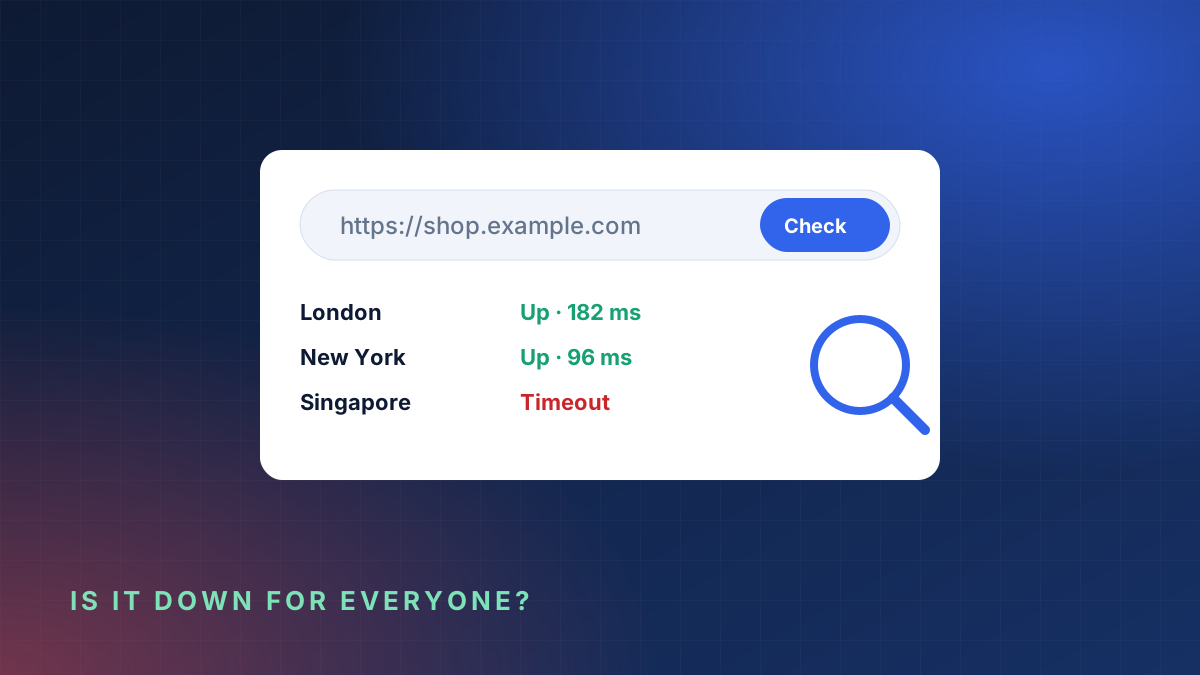
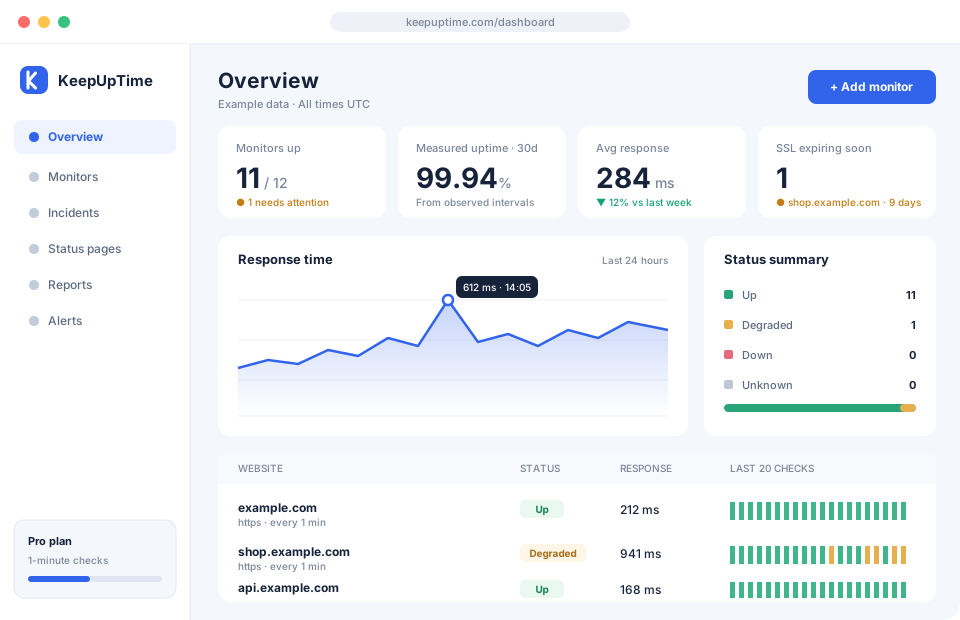
Uptime monitoring is a service that visits your website on a schedule, for example every minute, and checks that it answers correctly. If it stops answering, you get an alert by email, WhatsApp, Slack or another channel you choose.
Without monitoring, most site owners hear about an outage from a customer, often hours later.
How a check works
- A monitoring server requests your page, just like a browser.
- It records the HTTP status code and how long the answer took.
- If the check fails, a second check confirms the problem so you are not woken up by a one-off network blip.
- Once confirmed, an incident is opened and your alert channels are notified.
What 99.9% uptime really means
Uptime percentages sound similar but hide big differences:
- 99% allows about 7 hours 18 minutes of downtime per month.
- 99.9% allows about 44 minutes per month.
- 99.99% allows about 4 minutes per month.
If your website earns money or generates leads, every minute of downtime is lost revenue and lost trust.
What else should you monitor?
SSL certificates
An expired certificate shows visitors a full-page security warning. Monitoring warns you days before the expiry date.
Cron jobs and background tasks
Backups and scheduled jobs fail silently. A heartbeat monitor alerts you when a job does not check in on time.
Getting started
You can run a free website check right now, or start a 3-day free trial to monitor your sites every minute.